
Three Frontier Models in Seven Days
GPT-5.6, Grok 4.5, and Meta's first paid API all landed in the same week, and the price war is on.

Three frontier labs shipped new models inside the same seven days. OpenAI released the GPT-5.6 family and an agent called ChatGPT Work, xAI put out Grok 4.5 at $2 per million input tokens, and Meta started charging for access to its own frontier model for the first time with Muse Spark 1.1. Meta undercut rival flagship rates by roughly 75 percent, xAI pitched Grok 4.5 as Opus-class at a fraction of the cost, and OpenAI's cheapest new tier runs $1 per million input tokens. The same week brought a $26.5 billion memory IPO and a $1 billion compute deal, so the money keeps flowing into the infrastructure underneath. If model prices keep falling while capacity spending keeps climbing, the question is which side of that squeeze gives first.
AI In The News
OpenAI Ships GPT-5.6 and Puts ChatGPT to Work

OpenAI released GPT-5.6 in three tiers named Sol, Terra, and Luna, priced at $5, $2.50, and $1 per million input tokens. The company says Sol is 54 percent more token-efficient on coding tasks than its predecessor and calls it OpenAI's strongest cybersecurity model, and the US government asked for a staggered rollout before broad release. Alongside the models, OpenAI launched ChatGPT Work, an agent that pulls context from your connected apps and returns finished documents, spreadsheets, presentations, and websites. It reaches Pro, Enterprise, and Edu subscribers first.
Grok 4.5 Targets Coding Work at $2 Per Million Tokens
xAI, now operating under the SpaceX umbrella, released Grok 4.5 as a model for coding and agentic work rather than consumer chat. Elon Musk described it as "an Opus-class model, but faster, more token-efficient and lower cost." Pricing lands at $2 per million input tokens and $6 per million output tokens, under current flagship coding rates from Anthropic and OpenAI on both sides of the ledger. For teams running agents that burn tokens all day, that output price is the number to watch.
Meta Charges for Frontier Access for the First Time
Meta Superintelligence Labs released Muse Spark 1.1, a multimodal reasoning model aimed at agentic work with a 1-million-token context window and improved tool use, computer use, and coding. It arrived with a public preview of the Meta Model API, the first time Meta has sold direct access to one of its own frontier models. Pricing is $1.25 per million input tokens and $4.25 per million output, roughly a quarter of rival flagship rates. For a company that spent years giving Llama away, selling Spark access is a strategy reversal.
Tool of the Week: ChatCut
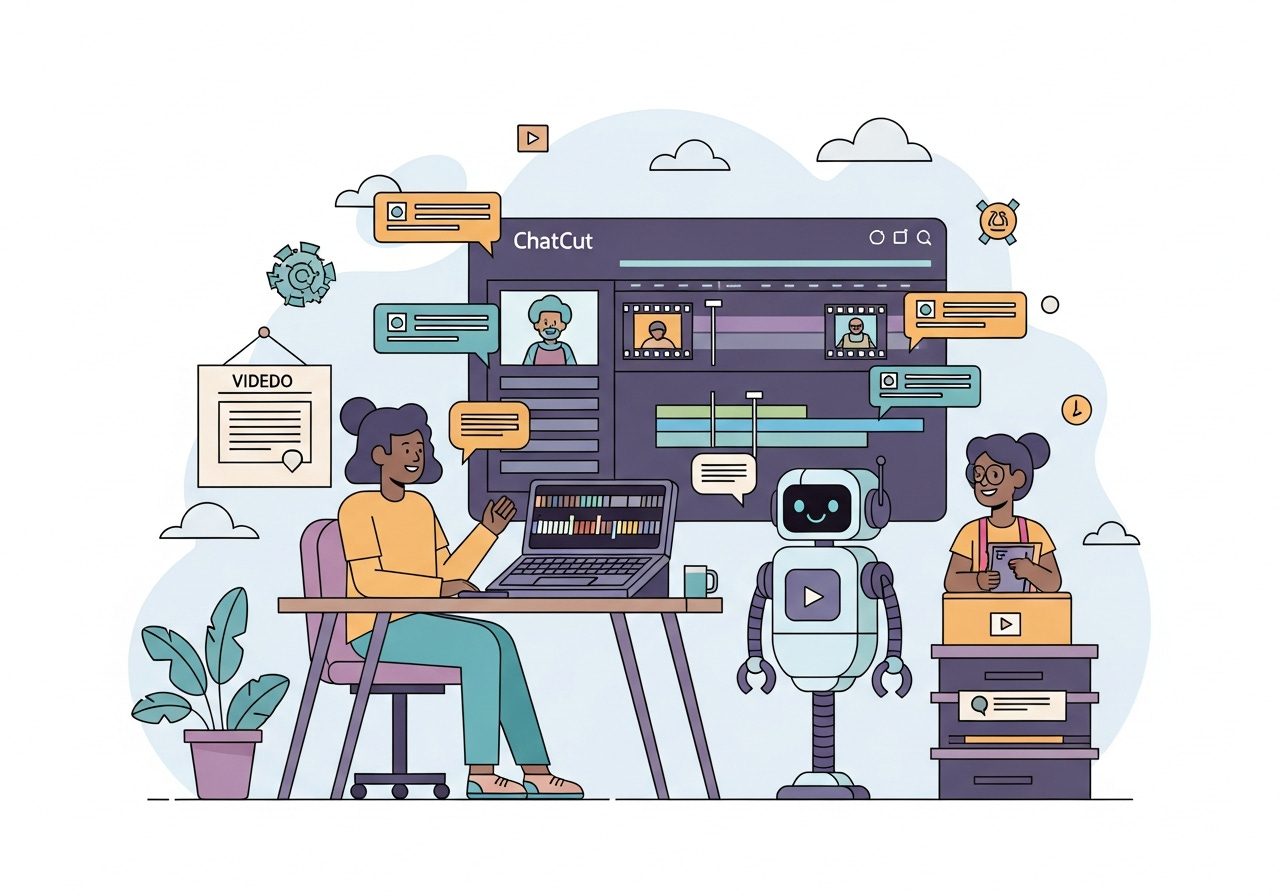
ChatCut is an AI video editor you drive by chat, built on a real editable timeline instead of a locked template.
You describe the edit in plain language, and ChatCut executes it on an actual timeline: cut the dead air, caption everything, pull B-roll candidates, tighten the intro. Every change stays editable afterward, and projects export as XML to professional editors, so nothing gets trapped in the tool. One Product Hunt reviewer ran talking-head footage through it and let the AI handle logging, dead-air cuts, and first-pass B-roll sourcing, the tedious early hours of an edit, while keeping full timeline control for the finish work. It runs in the browser, as a desktop app, and as a ChatGPT plugin, and it was the number one product of the day on Product Hunt on July 10.
What Makes It Stand Out
Chat commands execute on a real timeline, and every edit stays adjustable after the AI makes it
Transcript-based editing plus auto captions in more than 100 languages
XML export hands the project to Premiere Pro, DaVinci Resolve, or Final Cut
Built-in generation on paid plans: Seedance 2.0 video, GPT Image 2 and Nano Banana 2 images, AI music, motion graphics
Pricing
Free tier with starter credits, no credit card required
$25/month for 100 credits
$100/month for 400 credits
Annual billing cuts either plan in half
Other Headlines We Can't Skip
⚖️ Apple sues OpenAI over trade secret theft. The complaint says recruits were asked to bring Apple hardware components to interviews and names a 24-year Apple veteran as directing the effort. Read more
📸 Meta kills Instagram photo remixing three days after launch. The Muse Image feature let anyone generate altered versions of any public account's photos without notification, and CAA and SAG-AFTRA pushed back hard. Read more
💾 SK Hynix raises $26.5 billion in the biggest foreign IPO in US history. The Nvidia memory supplier topped Alibaba's 2014 record and opened 14 percent above its IPO price on Nasdaq. Read more
💵 SambaNova lands $1 billion at an $11 billion valuation. JPMorgan Chase picked the chipmaker as an inference partner and will run its systems on-premises for in-house AI. Read more
🗂️ Cursor is building Sand, an agent for everyone else. Anysphere's first product for non-developers handles email, spreadsheets, and documents, with launch timing tied to SpaceX's pending $60 billion acquisition. Read more
🇪🇺 The EU wants frontier models security-tested by 2027. A new Commission action plan sets up a secure testing platform by the end of 2026 and a European capacity to evaluate frontier models for cybersecurity. Read more
🇮🇳 Anthropic rolls out rupee pricing for India. Claude Pro now costs Rs 2,000 a month in Anthropic's second-largest market, which accounts for 5.8 percent of global usage. Read more
⚡ Reflection signs a $1 billion compute deal with Nebius. The open-weight lab locked up access to Nvidia's latest chips weeks after a similar arrangement with SpaceX. Read more
🎬 PixVerse passes a $2 billion valuation on a $439 million raise. The Singapore video-generation startup claims 150 million registered users and will spend the money on world models and expansion. Read more
🎧 Spotify launches a chat-based music assistant. Premium subscribers in the US, Ireland, and Sweden can now talk their way to playlists, podcast picks, and library actions. Read more
Prompt of the Week: Recitation, or Making the AI Reread Its Own Plan
Long AI sessions have an attention problem. Models attend most strongly to the start and end of their context window, and in a long agent run or multi-step chat, your original goal drifts into the weakly attended middle while recent output piles up at the end. Recitation fixes this with zero infrastructure: the model keeps a checklist of the full plan and rewrites it at the end of every step, which plants the objective in the newest tokens where attention is strongest. The team behind Manus, a production autonomous agent whose tasks average around 50 tool calls, built their agent to keep a todo.md file and update it after every action, and document the pattern as a deliberate attention-manipulation mechanism that cuts goal drift on long tasks.
The pattern earns its keep anywhere a task runs longer than a handful of steps. Give Claude or ChatGPT a research-and-write job with eight subtasks, and by step six, it is following whatever the last few messages discussed instead of the brief you opened with. With recitation, every step ends with the full checklist restated, completed items checked, and the current one marked, so step nine executes against the same plan as step one. You also get a live progress readout, so you can correct the moment a step goes sideways.
The Prompt
```
Before you begin, write out the full plan for this task as a numbered checklist. After every step you complete, restate the entire checklist before doing anything else: mark completed items as done, mark the step you are working on as current, and keep unfinished items unchanged. Never summarize or shorten the checklist. If the plan needs to change, rewrite the checklist first and tell me what changed. Here is the task: [YOUR TASK]
```
Check Out This Podcast: Authentic & Agentic
My friend Jason Manship has an excellent podcast that you should subscribe to. Learn about "Staying Human with AI" from his weekly show.