
Washington Hits the Kill Switch
A federal order pulls Fable 5 and Mythos 5, a Munich court makes Google liable for its AI answers, and OpenAI files to go public.

Three days after Anthropic launched Fable 5 and Mythos 5, the US government ordered them switched off. The directive cited national security and barred foreign nationals from any access, which left Anthropic no way to comply except to disable both models for everyone. The same week pulled in two other outside forces that rarely touch frontier AI this directly. A court in Munich ruled that Google's AI Overviews are Google's own words, making the company liable when those summaries invent damaging claims about real people. And OpenAI confirmed it filed confidentially for an IPO, opening its economics to public-market scrutiny for the first time. For two years, the story was labs racing each other on capability. This week, the story was governments, courts, and markets deciding how far that race gets to run.
AI In The News
Washington Forces Anthropic to Pull Fable 5 and Mythos 5
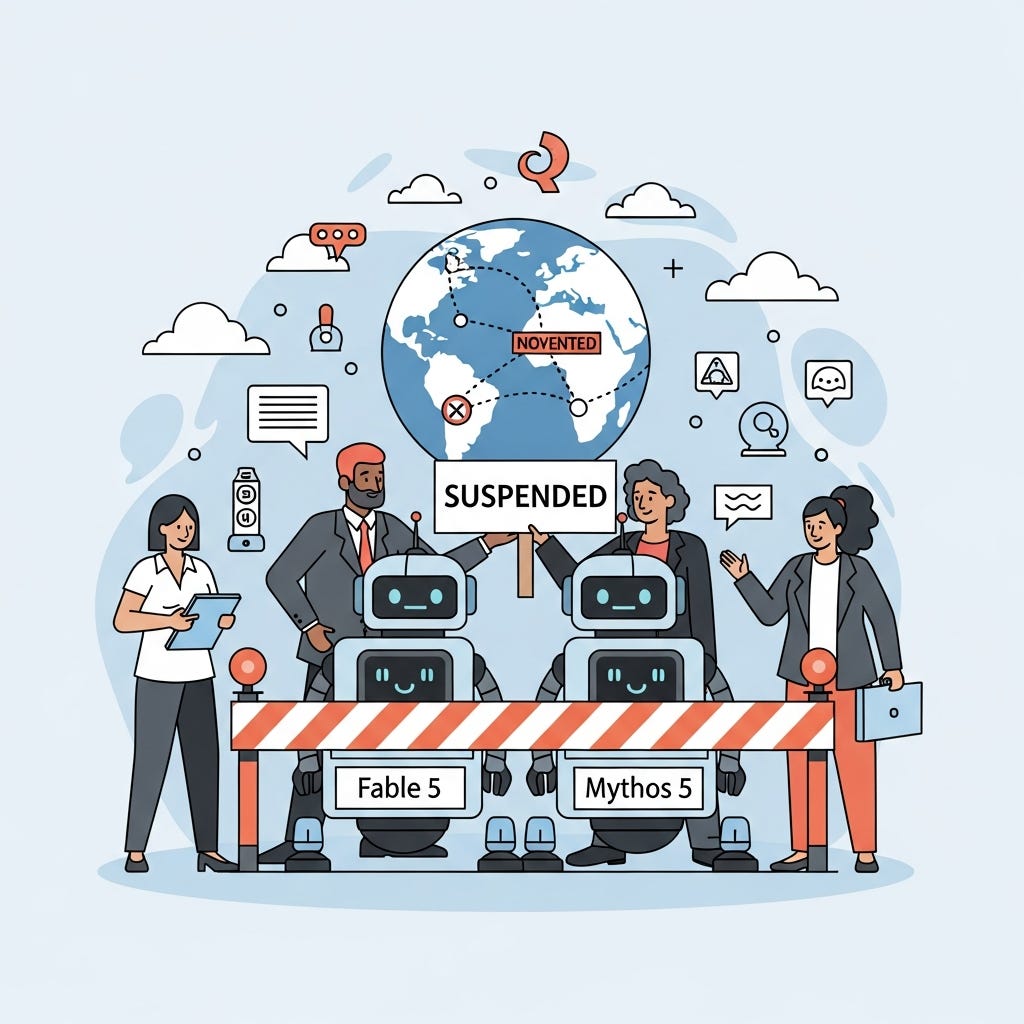
On June 12 the US government issued an export control directive ordering Anthropic to suspend all access to Fable 5 and Mythos 5 for any foreign national, three days after the two models launched. Because the order reached foreign nationals everywhere, including Anthropic's own employees, the company said the only way to comply was to disable both models for every customer. Every other Anthropic model stayed online. The stated trigger was a narrow jailbreak that got Fable to read a codebase and flag a few minor known vulnerabilities, which Anthropic says other public models surface without any bypass. The company is complying while arguing that recalling a model used by hundreds of millions over a narrow finding would, as a standard, freeze new deployments across the entire industry.
OpenAI Files Confidentially for an IPO

OpenAI confirmed on June 8 that it submitted a confidential S-1 to the SEC, saying it expected the filing to leak and chose to announce it first. A listing could come as early as September, with analysts placing the valuation anywhere from roughly 730 billion to past 1 trillion, and Goldman Sachs, Morgan Stanley, and JPMorgan leading the work. The move follows Anthropic's own IPO signal on June 1 and lands the same week SpaceX priced the largest offering on record. OpenAI was careful to say it has not set timing and that some plans are easier to pursue while private, so the filing reads as keeping the option open rather than committing to a date. The confidential route lets the company gauge the SEC's reaction before any numbers go public, which means the real tell will be the revenue and burn figures in the eventual S-1.
German Court Holds Google Liable for False AI Overview Answers
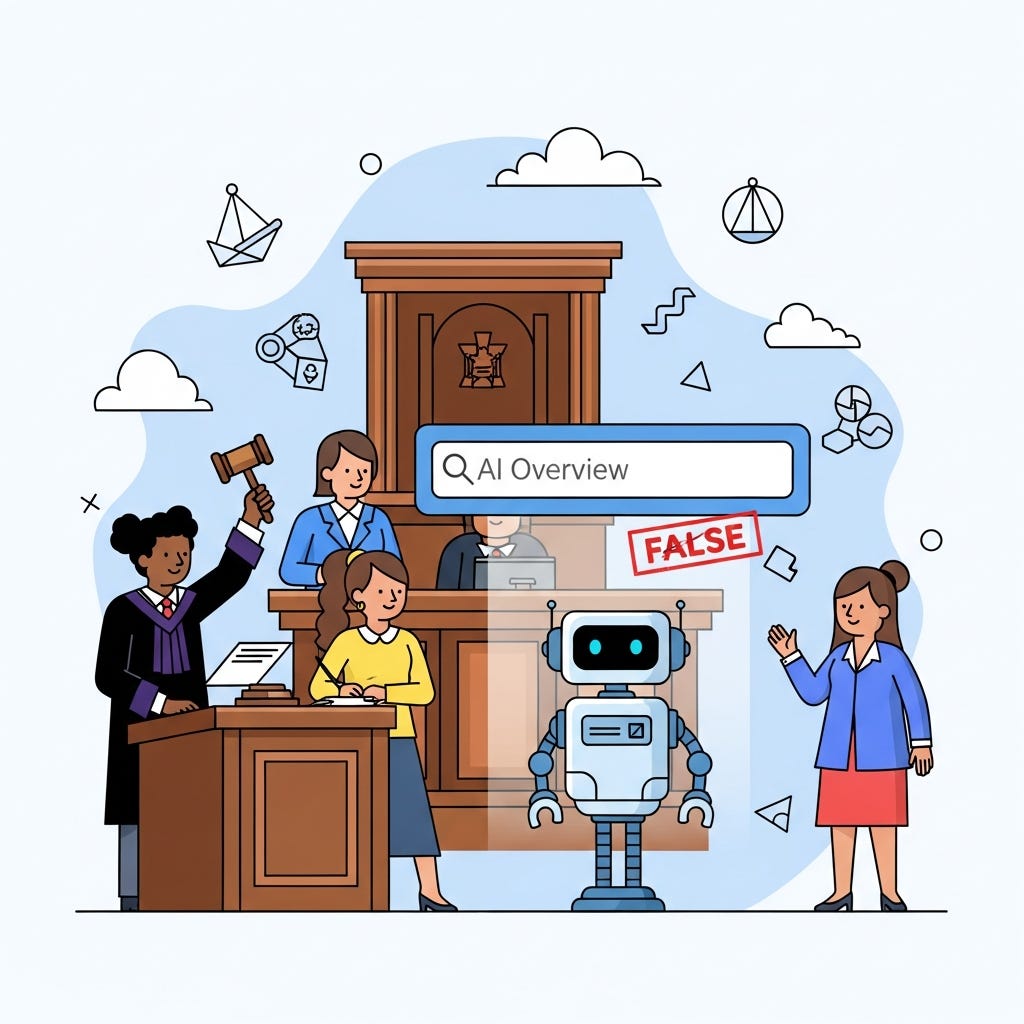
A regional court in Munich ruled that Google can be held directly liable for false statements its AI Overviews produce, treating the summaries as Google's own speech rather than protected search results. The case involved two Munich publishers whose names the AI tied to scams and dubious business practices that appeared in none of the linked sources. The court reasoned that AI Overviews go past listing results because they evaluate, combine, and rewrite information into new statements, which removes the liability shield search engines normally enjoy. It issued a temporary injunction barring Google from repeating the false claims. This appears to be the first time a court has held an AI company responsible for what its model says, and the reasoning could travel well beyond Germany.
Tool of the Week: Dify
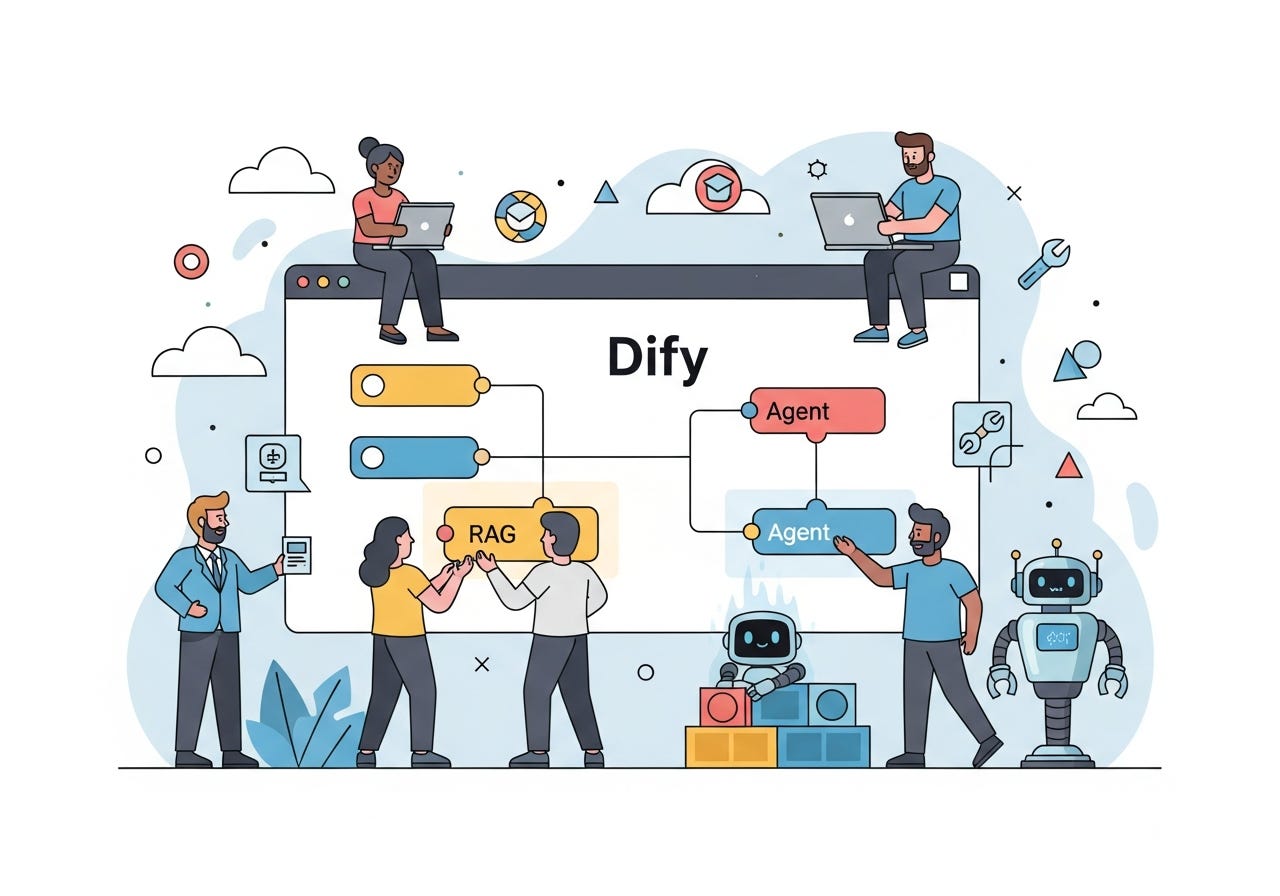
An open-source platform for building LLM apps, agents, and RAG pipelines on a visual canvas.
Dify pulls the parts of an AI application into one place: a visual workflow canvas, a retrieval pipeline for your own documents, an agent framework with tool calling, model management, and built-in observability. Rather than wiring a vector database, an orchestration layer, and a model gateway together by hand, you assemble the flow by dragging nodes and connecting them. It supports hundreds of models, including GPT, Claude, Gemini, Mistral, and Llama, plus local models through Ollama for fully on-premises inference. What separates it from a thin chatbot wrapper is that the same project can ship as a production API, an embedded widget, or an internal tool, and you can self-host the whole stack under an open-source license.
Picture a small operations team that needs an internal assistant answering policy questions from a few hundred PDFs. The build-it-yourself version means standing up a vector store, writing chunking and retrieval code, and babysitting the glue every time a dependency shifts, which is exactly where these projects stall. In Dify the team uploads the documents, points the RAG node at them, picks Claude as the model, and ships a working endpoint in an afternoon. When an answer comes back wrong, the observability view shows the retrieved chunks and the prompt, so the fix is a config change rather than a code-spelunking session. Self-hosting keeps the documents on the team's own infrastructure, which matters when the content is internal.
What Makes It Stand Out
Visual canvas that combines RAG, an agent framework, model management, and observability in one place
Supports hundreds of models across providers, plus local inference through Ollama for offline or on-premises use
Every app ships as a production API, an embeddable widget, or an internal tool from the same project
Open-source and self-hostable, so data can stay on your own infrastructure with no usage caps
Runs on modest hardware, with a standard Docker Compose deployment for the full self-hosted stack
Pricing
Sandbox: free, includes 200 message credits per month for testing
Professional: $59 per month for individual builders and small projects
Team: a higher monthly tier with more credits and seats for collaborators
Community Edition: free under the open-source license, self-hosted, you pay only for your own infrastructure and model costs
Other Headlines We Can't Skip
🍏 Apple rebuilds Siri on Google Gemini and opens the iPhone to Claude.
At WWDC, Apple unveiled a Siri overhaul running on a custom 1.2-trillion-parameter Gemini model under a reported billion-dollar-a-year deal, plus an Extensions framework that lets users route questions to Claude or ChatGPT, in Tim Cook's farewell keynote. Read more
💸 Jeff Bezos' Prometheus raises 12 billion at a 41 billion valuation.
Bezos steps back into a chief executive role co-leading an "artificial general engineer" meant to automate the design and manufacturing of physical systems from jet engines to drug compounds, with total funding now past 18 billion. Read more
🪙 Coinbase opens trading to AI agents.
A new product lets assistants like Claude and ChatGPT execute spot and derivatives trades and pay for research through the x402 protocol, working inside isolated, permissioned portfolios with spending controls on the way. Read more
⚖️ Fired xAI engineer sues over Grok safety warnings.
A former engineer alleges xAI dismissed him for raising AI safety concerns, naming xAI and SpaceX in a California state court filing. Read more
🤝 Anthropic launches a 150 million dollar Claude Corps fellowship.
The program will place 1,000 early-career fellows inside US nonprofits at 85,000 dollars a year to put Claude to work on real missions, run with CodePath and Social Finance. Read more
☁️ OpenAI models and Codex come to Oracle Universal Credits.
Enterprises will be able to apply existing Oracle cloud commitments toward OpenAI frontier models and Codex through OCI, removing a separate procurement step, with rollout in the coming weeks. Read more
🏢 KPMG and Microsoft roll out Agent 365 worldwide.
KPMG is deploying Microsoft's Agent 365 and Copilot across its global workforce to manage, monitor, and secure enterprise AI agents at scale. Read more
Prompt of the Week: Loop Engineering
Loop engineering is the practice of designing the system that prompts the agent, instead of prompting the agent yourself. For two years, the pattern was simple: write a prompt, read the output, write the next one, with you holding the tool through every turn. A loop replaces that with a small control system that finds the work, hands it to an agent, checks the result, records what got done, decides the next step, then runs on a schedule without you. The phrase took off in early June after developer Peter Steinberger and Boris Cherny, who runs Claude Code at Anthropic, both described dropping direct prompting, with Cherny putting it plainly that his job now is to write loops. It works because the bottleneck in long jobs is rarely the model’s reasoning on a single turn; it is the human relaying state between turns, and a written-down loop with an external memory file carries that state, so the agent picks up where it left off.
The clearest place this beats one-off prompting is recurring research you would otherwise grind through by hand. Say you track a topic for a weekly update, like AI policy or what your competitors are shipping. Prompted manually, you open the same sites every morning, skim for anything new, paste promising links into a chat, ask for a summary, and try to remember what you already covered last week. Set up as a loop, a scheduled run checks your sources each morning, compares what it finds against a running memory file so it ignores anything already logged, drafts a short brief on each genuinely new item, and runs a second pass to check those briefs against the original articles before saving them. The failure mode it avoids is the agent re-summarizing the same story every day or inventing a detail the source never said, because the memory file holds the history, and the checker reads the source. You stop refreshing tabs and start reviewing a clean list.
The Prompt
Loop: every morning, brief me on what is genuinely new in [your topic, for example "AI policy" or "my three main competitors"].

On each run:
1. Check these sources for anything published in the last 24 hours: [list three to six sites, newsletters, or feeds you trust].
2. Open brief-log.md and read what you have already covered. Skip anything already in it.
3. For each genuinely new item, write a two-sentence brief: what happened, and why it matters to [your audience or goal].
4. Before saving, reread the original article and confirm every claim in your brief matches it. Cut anything you cannot verify.
5. Append the confirmed briefs to brief-log.md with the date and the source link, so tomorrow's run does not repeat them.
6. Send me the new briefs as a short list. If nothing qualifies, say so instead of padding the list.Check Out This Podcast: Authentic & Agentic
My friend Jason Manship has an excellent podcast that you should subscribe to. Learn about "Staying Human with AI" from his weekly show.