
When One Is Enough
A federal judge halts the Anthropic ban, a solo founder hits $1.8 billion with AI tools, and Google hands its best open models to the world.

The common thread this week is the power of singular decisions. A federal judge in San Francisco halted the Trump administration’s ban on Anthropic, ruling that blacklisting an AI company for refusing to remove safety guardrails looks a lot like First Amendment retaliation. On the same timeline, a telehealth founder with a $20,000 budget and a roster of AI tools generated $401 million in his first year, with a total headcount of two, and is now tracking toward $1.8 billion. Meanwhile, Google released Gemma 4 under an Apache 2.0 license, removing the deployment restrictions that kept enterprises from building production systems on its open models. Anthropic’s leaked “Mythos” model is generating its own news cycle, Cursor rebuilt its entire IDE around the premise that developers will manage AI agents rather than write code, and Slack just shipped the biggest update since Salesforce bought it. The question running underneath all of it: how much can one entity, whether a judge, a founder, or a license, actually change? Based on this week, quite a lot.
AI In The News
Federal Judge Blocks Trump’s Anthropic Ban, DOJ Appeals

U.S. District Judge Rita Lin halted the Trump administration’s supply chain risk designation against Anthropic, the executive action that banned all federal agencies and contractors from using Claude. Lin called the designation “likely both contrary to law and arbitrary and capricious,” adding that nothing in the statute supports branding an American company a national security threat for disagreeing with the government. The ruling identifies the ban as First Amendment retaliation for Anthropic’s refusal to remove safety restrictions during its Pentagon contract dispute, a confrontation this newsletter covered in detail in early March. The DOJ filed a notice of appeal on April 2, pushing the case to the Ninth Circuit. For now, the injunction holds, and Anthropic’s enterprise customers can work with the company again without supply chain liability hanging over them.
One Founder, $20K, and AI Built a $1.8 Billion Company

Matthew Gallagher spent $20,000 and two months building Medvi, a GLP-1 telehealth provider, using ChatGPT, Claude, and Grok to write code, generate ad creative, and handle customer service. The company hit $401 million in first-year revenue at a 16.2% net profit margin, with a total workforce of two: Gallagher and his brother. It is now tracking toward $1.8 billion in 2026 revenue. The regulated components (licensed physicians, pharmacy fulfillment, shipping) are outsourced to partner companies, while Gallagher kept the customer relationship and focused entirely on acquisition. Sam Altman predicted in 2024 that AI would enable a single person to build a billion-dollar company, and that timeline just collapsed.
Google Releases Gemma 4: Open-Weight Models Under Apache 2.0
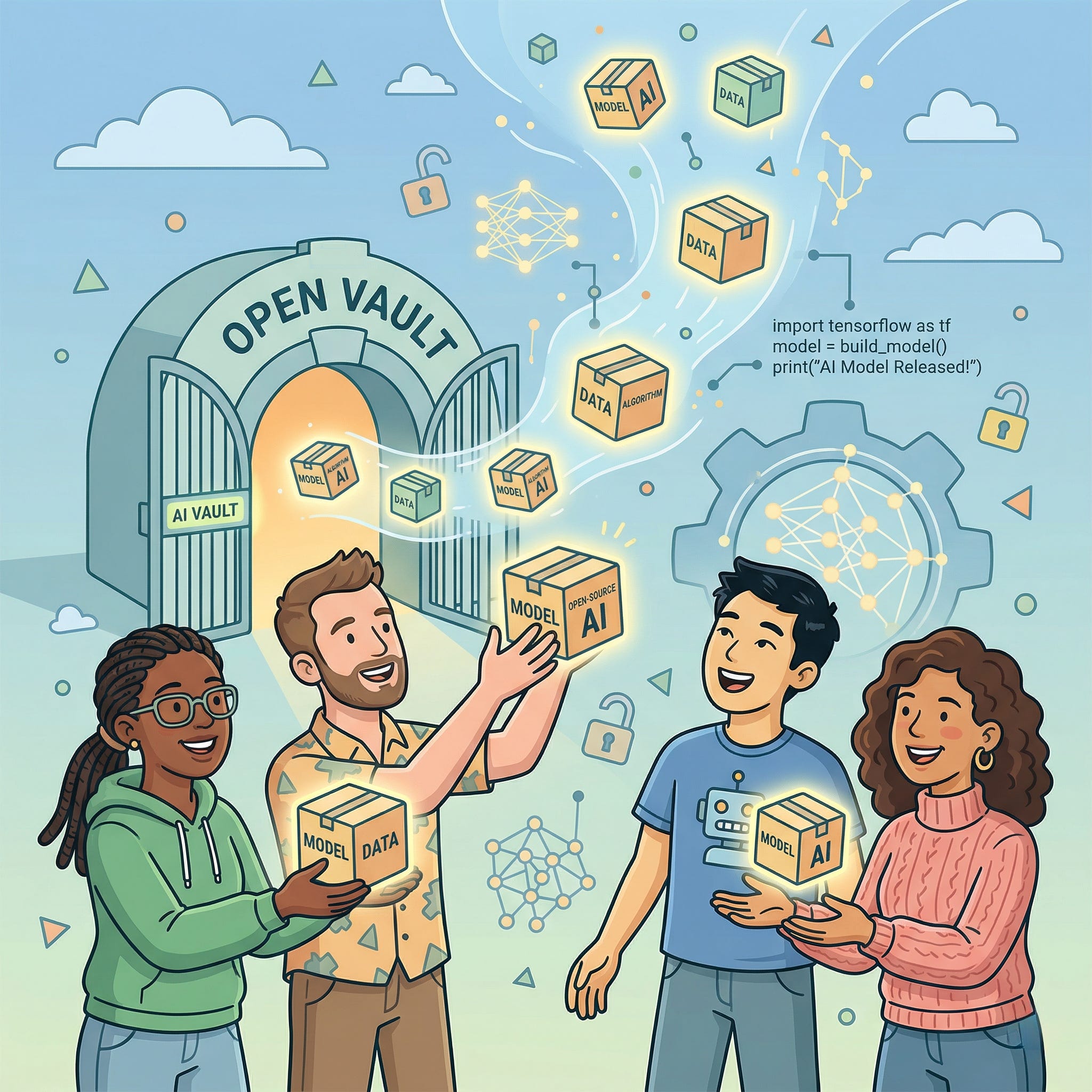
Google released Gemma 4 on April 2, a family of four open-weight models spanning edge devices to data centers, and licensed them under Apache 2.0 for the first time. The license change matters more than the benchmarks: earlier Gemma versions carried restrictions that blocked many enterprise and commercial deployments, and Apache 2.0 removes all of them. The 31B dense model currently ranks #3 on the Arena AI text leaderboard, with the 26B mixture-of-experts model at #6. All four models are multimodal, processing text, images, and video natively, with support for 140+ languages and built-in function calling for agent workflows. The models are available now on Hugging Face, Kaggle, Ollama, and Google AI Studio.
Tool of the Week: Attie
An AI-powered custom feed builder for Bluesky that lets you design your own algorithm using plain language.

Attie is a standalone app built on the AT Protocol and powered by Anthropic’s Claude that turns natural language prompts into custom Bluesky feeds. Instead of writing code or learning filtering syntax, you describe what you want (“show me tech news but skip crypto drama,” “art posts from people I follow plus similar creators”) and Attie generates the feed instantly. Jay Graber, Bluesky’s co-founder, stepped back from the CEO role specifically to build it, which signals how central algorithmic choice is to Bluesky’s identity. The longer-term vision goes beyond feeds: users will eventually be able to build full applications on top of the AT Protocol through Attie’s interface.
What Makes It Stand Out
Turns plain English descriptions into working algorithmic feeds with no code required, using Claude as the underlying coding agent to generate AT Protocol feed logic in real time.
Built on the AT Protocol, so feeds are portable and not locked to a single platform. Anything you create in Attie can be used in any AT Protocol-compatible app.
Positions AI as a tool that serves users rather than platforms. Attie is the inverse of how most social networks use AI: instead of optimizing for engagement, it optimizes for whatever you tell it to prioritize.
Pricing
Free during the current invite-only beta (waitlist open at attie.ai)
Monetization model under consideration, with subscriptions and hosting services as the leading options
Other Headlines We Can’t Skip
🔓 Anthropic’s “Mythos” Model Leak Confirms a New Tier Above Opus
A configuration error exposed internal documents revealing Claude Mythos (codename Capybara), which Anthropic calls “a step change” in capability, with the company privately warning U.S. officials about its cybersecurity implications.
Read more
💻 Cursor 3 Rebuilds the IDE Around Managing AI Agents
The new agent-first interface lets developers run parallel AI agents across repos and environments, with built-in Git and agent launches from mobile, Slack, or GitHub. Read more
🤖 Slack Gets Its Biggest Update Since the Salesforce Acquisition
Thirty new AI features turn Slackbot into an autonomous work agent with MCP integration, reusable AI-Skills, desktop operation outside Slack, and lightweight CRM capabilities.
Read more
🎙️ Microsoft Launches Three In-House AI Models to Reduce OpenAI Dependence
MAI-Transcribe-1 beats Whisper on all 25 languages, MAI-Voice-1 generates 60 seconds of audio in under one second, and MAI-Image-2 debuted at #3 on the Arena AI image leaderboard.
Read more
🛍️ Macy’s AI Shopping Assistant Drives 4.75x More Spending Per Visit
The “Ask Macy’s” chatbot, powered by Google Gemini, functions as a digital stylist with virtual try-on, and customers who used it during testing spent nearly 400% more.
Read more
⚡ Google’s TurboQuant Cuts LLM Memory Usage by 6x With No Accuracy Loss
The compression algorithm squeezes key-value caches to 3 bits and delivers up to 8x performance gains on H100 GPUs, with the internet already calling it “Pied Piper.”
Read more
🇫🇷 Mistral Raises $830 Million in Debt for a Paris AI Data Center
Seven banks backed the financing for 13,800 Nvidia GB300 GPUs, with the facility expected to be operational in Q2 2026 as Europe’s most direct bet on homegrown frontier AI infrastructure.
Read more
🥔 OpenAI’s GPT-5.5 “Spud” Finishes Pretraining After Two Years
OpenAI shut down Sora and redirected resources toward Spud, its longest development cycle since GPT-4, with Sam Altman saying release is “within a few weeks.”
Read more
🧠 Gemini 3.1 Pro Ties GPT-5.4 on Benchmarks at One-Third the API Cost
Google’s latest model leads 13 of 16 major benchmarks with a 1M token context window and is now available in NotebookLM for Pro and Ultra users.
Read more
Prompt of the Week: Feed Curation Ruleset Generator
If you have ever opened a social feed and immediately felt like it was built for someone else, this prompt is for you. Most algorithmic feeds optimize for engagement, which means they surface whatever keeps you scrolling rather than whatever you actually want to see. Tools like Bluesky’s new Attie app (this week’s Tool of the Week) are starting to hand that control back to users, but they still require you to articulate what you want. The problem is that most people know what annoys them in their feed long before they can clearly define what they want instead.
This prompt solves that by walking you through a structured conversation with any LLM to produce a detailed content filtering and prioritization ruleset. You describe your professional interests, the noise that drives you away, the signal you wish you saw more of, and any hard boundaries. The output is a portable ruleset you can paste directly into Attie, apply to RSS filters, or use as a starting template for any platform that lets you customize your feed. It works because it forces you to be specific about the difference between “content I engage with out of habit” and “content I actually value.”
The Prompt
You are a content feed strategist. I want to build a detailed ruleset that defines exactly what my ideal social media or news feed looks like. Ask me the following questions one at a time, wait for my response to each before moving on, then generate my ruleset at the end.
Questions to ask me:
1. What are my top 3-5 professional or personal interests that I want prioritized in my feed?
2. What types of content do I actively dislike seeing? (Examples: rage-bait, engagement farming, crypto speculation, celebrity gossip, motivational quotes, etc.)
3. What formats do I prefer? (Long-form articles, short updates, threads, images, video, data visualizations, etc.)
4. Are there specific people, publications, or organizations whose content I always want to see, regardless of algorithm?
5. Are there keywords, phrases, or topics I want hard-filtered out, meaning I never want to see them?
6. How do I feel about content from accounts I do not follow? (Open to discovery, only from follows, somewhere in between?)
7. What time-sensitivity matters to me? (Breaking news priority, evergreen content preferred, or a mix?)
8. Am I optimizing this feed for a specific platform? If so, which one?

After I answer all questions, generate my ruleset in this format:

FEED CURATION RULESET
=====================
Priority Topics: [ranked list]
Blocked Topics: [list]
Preferred Formats: [list]
Pinned Sources: [list with brief reason for each]
Hard Filters: [keywords/phrases to exclude]
Discovery Setting: [open/closed/limited with parameters]
Time Sensitivity: [breaking/evergreen/mixed with weighting]
Platform Target: [platform name and any platform-specific rules]

Additional Rules:
- [Any custom rules derived from my answers]
- [Conflict resolution: what happens when a post matches both a priority topic and a blocked topic]
- [Frequency caps: maximum posts per source per day if relevant]

Make the ruleset specific enough to be immediately usable in a feed filtering tool, but readable enough that I can edit it by hand later.
Check Out This Podcast: Authentic & Agentic
My friend Jason Manship has an excellent podcast that you should subscribe to. Learn about “Staying Human with AI” from his weekly show.